
Golden Triangle Tour with Ranthambore Tiger Safari Private 6-Day India Tour
Why the Golden Triangle with Ranthambore Is North India's Most Rewarding Tour
Fewer than 1,000 Bengal tigers roam Ranthambore National Park and on a single morning game drive, you could lock eyes with one of them from barely 20 metres away. That raw, pulse-quickening encounter is what separates a standard Golden Triangle tour with Ranthambore tiger safari from every other heritage circuit across India.
The classic Delhi Agra Jaipur route already delivers the world’s most photographed monument, two UNESCO World Heritage Sites, and a kaleidoscope of Mughal and Rajput architecture. Adding Ranthambore transforms it from a monument itinerary into a multi-sensory adventure one that weaves centuries old forts, the shimmering marble of the Taj Mahal, and the adrenaline of a wildlife safari into a single 6-day journey by private car.
Cabs in Agra has operated this exact route for over a decade, serving travellers from 40+ countries. Operations Manager Naresh Bhasin personally designs every itinerary, matching vehicle class, hotel tier, and safari zone to each guest’s priorities.
Your Route at a Glance Taj Mahal to Bengal Tigers in 6 Days
The golden triangle with ranthambore circuit follows a clockwise loop through North India:
- Day 1 – Delhi sightseeing: Red Fort, Jama Masjid, India Gate, Qutub Minar
- Day 2– Drive Delhi → Agra (233 km, ~4 hrs). Visit Taj Mahal and Agra Fort
- Day 3 – Drive Agra → Ranthambore (260 km, ~5.5 hrs) via Fatehpur Sikri
- Day 4 -Two tiger safaris in Ranthambore National Park (morning + afternoon)
- Day 5 -Drive Ranthambore → Jaipur (180 km, ~3.5 hrs). Evening bazaar walk
- Day 6 – Jaipur sightseeing: Amber Fort, City Palace, Hawa Mahal. Departure transfer
Total road distance across six days: approximately 673 km, broken into comfortable segments so you spend more time exploring than sitting in a car.
8 Reasons Travellers Choose This Itinerary
- Private AC car and professional driver no shared buses or rigid group schedules
- Guaranteed Ranthambore safari booking permits secured before you arrive in India
- All major UNESCO sites in one trip Taj Mahal, Agra Fort, Fatehpur Sikri, Red Fort, Qutub Minar
- Real chance to see wild Bengal tigers Ranthambore’s ~75 tigers roam across 392 sq km of open terrain
- Customizable schedule add a sunrise Taj Mahal visit, skip a monument, extend a day
- English-speaking licensed guide at every monument
- Flexible accommodation 3-star comfort hotels to heritage luxury palace properties
- Door-to-door service pickup from Delhi airport, hotel, or train station
“We used Cabs in Agra for our Golden Triangle tour. Excellent service, clean SUV, and our driver was extremely professional.” Sophie L., France ★★★★★
Day-by-Day Itinerary — Your Golden Triangle Ranthambore Tour Mapped Out
Every day below includes specific timings, key sites, and insider recommendations from Naresh Bhasin, Operations Manager at Cabs in Agra, who has designed and refined this route for thousands of international travellers.
Your driver meets you at Delhi Airport or your hotel. After a briefing on the week ahead, you head into Old Delhi, where the 17th-century Red Fort rises above the narrow lanes of Chandni Chowk. The sandstone-and-marble complex spans over 250 acres — allow at least 90 minutes.
Walk next to Jama Masjid, India's largest mosque, where the courtyard alone holds 25,000 worshippers. The muezzin's call to prayer echoes off red sandstone walls as you climb the southern minaret for panoramic views.
After lunch, your driver takes you to India Gate along Rajpath, and then to the Qutub Minar, a 73-metre UNESCO World Heritage tower dating to 1193 AD. Return to your hotel by late afternoon.
Overnight: Delhi (hotel of your choice — 3-star to 5-star)
Depart Delhi early morning for the 233 km drive to Agra along the six-lane Yamuna Expressway — smooth, well-maintained, and typically completed in under 4 hours. Travellers seeking only this leg can also book our Delhi to Agra same-day tour by car.
You arrive in Agra by mid-morning. Your guide leads you through the south gate of the Taj Mahal complex, and the first full view of the white marble mausoleum stops you mid-step. Morning light catches the semi-precious stone inlays — lapis lazuli, turquoise, carnelian — embedded in the marble panels. The reflecting pool stretches ahead, perfectly still. Camera shutters fire. A low hum of awe rises from visitors around you.
After the Taj, visit Agra Fort, a massive red sandstone fortress where Emperor Shah Jahan was imprisoned by his own son — gazing at a distant view of the Taj from his window. If time permits, your guide can add Mehtab Bagh for a sunset Taj panorama across the Yamuna River, or Itimad-ud-Daulah (often called the "Baby Taj").
Overnight: Agra
Insider tip from Naresh Bhasin: "Enter the Taj Mahal at opening — 6:00 AM in summer, 6:30 AM in winter. By 9:00 AM the crowds triple. Early light also produces the best photographs."
Check out of your Agra hotel and drive to Fatehpur Sikri (40 km west), Emperor Akbar's abandoned 16th-century capital. The Buland Darwaza gate stands 54 metres tall — the highest gateway in the world at the time of construction. Allow 60–90 minutes for the palace complex and the five-tier Panch Mahal pavilion.
Continue to Ranthambore — a 260 km journey taking approximately 5–5.5 hours through rural Rajasthan. The landscape shifts from irrigated farmland to thorny scrub forest as you approach the park boundary. Check into your wildlife lodge in Sawai Madhopur by late afternoon.
Overnight: Ranthambore / Sawai Madhopur
Pro tip: Safari permits for the next day are pre-booked by our team. Permits require passport details submitted 30–120 days before your safari date, depending on zone availability. We handle the entire process — you simply arrive and board your vehicle.
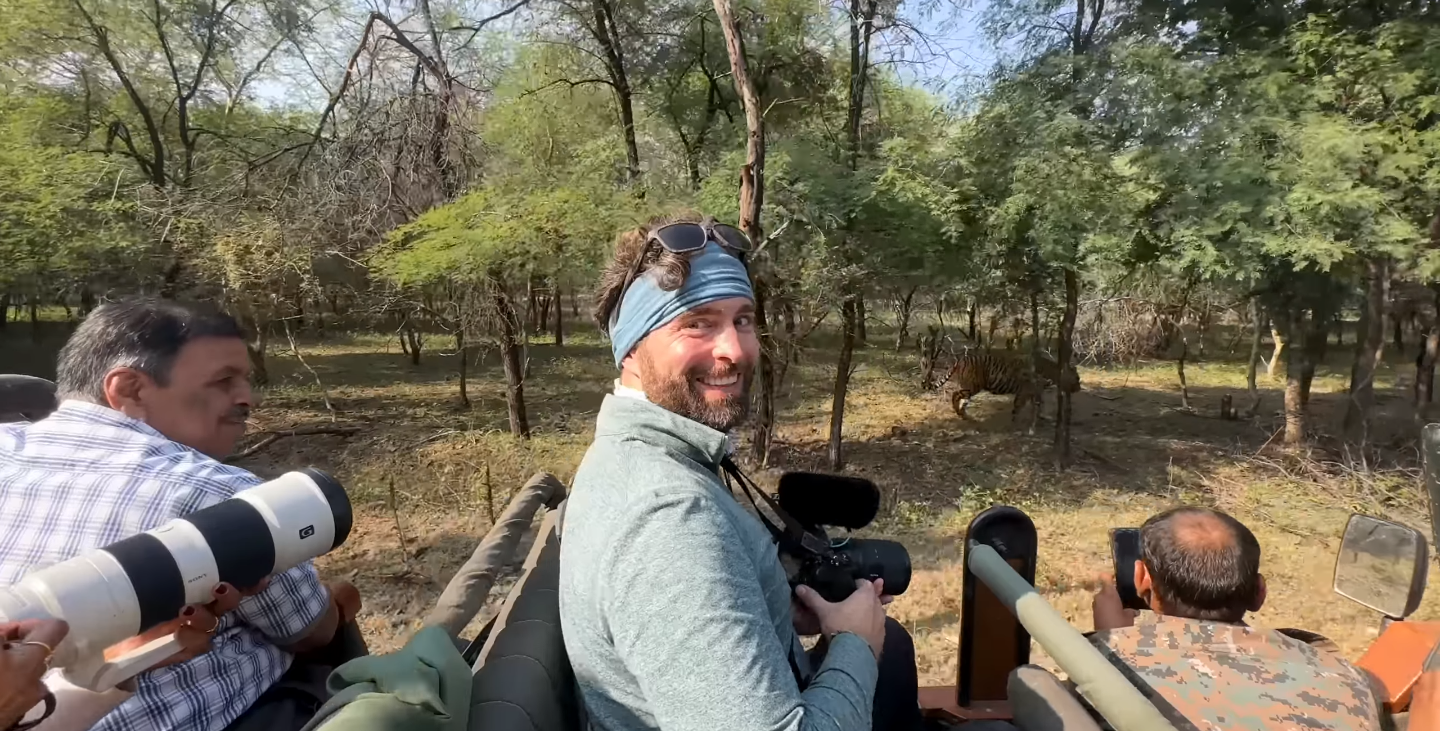
The alarm rings at 5:30 AM. Cool Rajasthani air hits your face as you climb into the open-top Canter. Spotted deer raise their heads. Langur monkeys bark alarm calls from the canopy. Peacocks strut across the trail. Your naturalist reads the signs: fresh pug marks in the dust, sambar deer alarm calls echoing through the ravine. Then — a flash of orange and black through the grass. A Bengal tiger emerges from behind a ruined pavilion, unhurried and utterly wild. Your shutter fires. Your heart pounds. Twenty-five metres separate you from a top predator.
Ranthambore National Park covers 392 sq km across 10 safari zones and shelters approximately 75 Bengal tigers, along with leopards, sloth bears, marsh crocodiles, and over 300 bird species. Two safaris — morning (6:00–9:30 AM) and afternoon (2:30–6:00 PM) — maximize your sighting chances.
Safari zone insight: Zones 1–5 are core zones surrounding the park's famous lakes — Padam Talao, Rajbagh, and Malik Talao — and historically offer the highest tiger density. Zones 6–10 (buffer) have lower tourist traffic but require more patience. Our team requests your zone based on the latest sighting data shared by park naturalists.
Overnight: Ranthambore
Following a final morning safari (optional — included in your package), depart for Jaipur, the Pink City. The 180 km drive takes approximately 3.5 hours through the scenic Aravalli countryside.
Arrive by early afternoon. Spend the evening strolling Johari Bazaar and Bapu Bazaar, where block-printed textiles, silver jewellery, and handmade leather juttis spill from centuries-old storefronts. The pink-washed buildings of the old city glow in late-afternoon sun.
Overnight: Jaipur
Your final day showcases Jaipur's three crown jewels. Amber Fort — perched on a hilltop 11 km north of the city — blends Rajput and Mughal architecture across mirrored halls, painted gateways, and lakeside gardens. Allow 2–2.5 hours.
Return to the city centre for City Palace, still partly occupied by the royal family, and the Hawa Mahal (Palace of Winds), whose 953 latticed windows allowed royal women to observe street life unseen. For a more immersive experience, explore our Jaipur sightseeing tour options.
Post-lunch, your driver transfers you to Jaipur Airport, Jaipur Railway Station, or continues your onward journey to Udaipur, Jodhpur, or back to Delhi.
This itinerary has been designed and regularly updated by Naresh Bhasin, Operations Manager at Cabs in Agra, based on real route conditions and thousands of guest feedback reviews.
Includes
Excludes
- ✅ Private air-conditioned car (sedan for 1–2 guests, SUV for 3–5 guests) for all transfers and sightseeing
- ✅ Professional English-speaking driver — licensed, experienced, GPS-tracked vehicle
- ✅ 2 Ranthambore safari sessions (morning + afternoon) with shared Canter or private Gypsy upgrade
- ✅ Licensed monument guides at Taj Mahal, Agra Fort, Amber Fort, and Delhi heritage sites
- ✅ 5 nights' accommodation (hotel tier of your choice — 3-star, 4-star, or heritage luxury)
- ✅ Daily breakfast at all hotels
- ✅ All monument entry fees (Indian and foreign tourist tickets)
- ✅ Fatehpur Sikri guided stop en route to Ranthambore
- ✅ Airport / hotel / station pickup and drop-off — Delhi and Jaipur
- ✅ 24/7 phone and WhatsApp support throughout your trip
- ✅ All road tolls, parking charges, and fuel costs
- ❌ International or domestic flights
- ❌ Lunches and dinners (flexibility to eat wherever you choose)
- ❌ Personal expenses (souvenirs, tips, laundry)
- ❌ Travel insurance (recommended — we suggest providers on request)
- ❌ Camera fees at monuments (typically ₹25–₹200 per site)
- ❌ Private Gypsy upgrade at Ranthambore (available at extra cost for an exclusive vehicle)
Best Time to Book a Golden Triangle Tour with Ranthambore Tiger Safari
Month-by-Month Season Guide & Safari Calendar
| Month | Weather | Crowd Level | Tiger Sighting Probability | Pricing Trend | Recommendation |
|---|---|---|---|---|---|
| October | Warm days (30°C), cool evenings | Moderate | Moderate (park just reopened) | Mid-range | ✅ Great month — pleasant, less crowded |
| November | Comfortable (25–28°C) | Rising | Good | Mid-range | ✅ Excellent — ideal sightseeing weather |
| December | Cool (10–22°C), foggy mornings | High (holiday season) | Good | Peak | ✅ Best weather, book 3–4 months ahead |
| January | Cold mornings (5–15°C), clear days | High | Good | Peak | ✅ Excellent, layer up for morning safari |
| February | Warming (12–25°C), clear skies | High | Good–High | Peak | ✅ Top month for photography |
| March | Warm (18–32°C) | Moderate | High | Shoulder | ✅ Tigers more active near water |
| April | Hot (25–38°C) | Low–Moderate | Very High | Shoulder | ⚡ Best tiger sighting odds, heat intense |
| May | Very hot (30–45°C) | Low | Highest | Low season | ⚡ Serious wildlife enthusiasts only |
| June | Extreme heat, pre-monsoon | Very Low | High | Lowest | ⚠️ Park closes 30 June; scorching |
| Jul–Sep | Monsoon — park closed | N/A | N/A | N/A | ❌ Safari not available |
Booking lead time: Reserve your tour 3–4 months in advance for peak season (November–February). Safari permits for popular zones (1–5) sell out 8–10 weeks before the drive date.
Ranthambore Safari Zones and Permit Booking Tips
Ranthambore is divided into 10 safari zones. Zones 1–5 are inside the core area and offer the highest tiger density they are also the first to sell out.
How Cabs in Agra secures your permits:
- We monitor the government booking portal daily.
- Permits open 120 days before the safari date.
- We book the moment the window opens typically within minutes of release.
- You receive confirmed permit details via email and WhatsApp.
Insider tip: If zones 1–5 are unavailable, zones 6 and 10 are strong alternatives with growing tiger populations and far fewer vehicles. Naresh Bhasin recommends zone 6 specifically for wildlife photographers its open grassland gives cleaner sight lines than the denser forest of zones 3 and 4.
Who Is This Golden Triangle Tour with Wildlife Safari Perfect For?
This tour works for a wide range of travellers but these six profiles get the most value from it:
🌏 First-time visitors to India This itinerary distils North India’s three greatest experiences (Mughal heritage, Rajput culture, and Bengal tiger safari) into a single, manageable trip. No overwhelming route planning. No wasted days.
📸 Wildlife and photography enthusiasts Ranthambore offers some of India’s best odds for photographing Bengal tigers in a natural forest setting, complemented by heritage architecture that’s equally photogenic.
💑 Couples and honeymoon travellers A Taj Mahal sunrise followed by a heritage palace stay in Jaipur and a jungle lodge in Ranthambore creates an unforgettable romantic arc. The luxury tier includes private dinners and sunset experiences.
👨👩👧👦 Families with older children (8+) The safari captivates young minds, the forts fuel imaginations, and the private car means no toddler meltdowns on a group bus. Flexible pacing lets you add rest time between sightseeing.
🧳 Time-limited travellers with only 5–7 days The itinerary is designed to maximise experiences per day without exhausting you. Average drive time between cities is just 3.5 hours, and every destination delivers concentrated value.
🏛️ Luxury travellers seeking a curated experience The Luxury tier places you in heritage palace hotels, private Gypsy safaris with a dedicated naturalist, and VIP monument access a level of immersion unavailable on group tours.
Related Tours
Golden Triangle Tour with Varanasi
- 7 Days
- Pickup Available
- Skip the ticket line
859 Reviews
Golden Triangle Tour with Ranthambore
- 6 Days
- Pickup Available
- Skip the ticket line
2109 Reviews
Why Travelers Trust Cabs in Agra for Their Golden Triangle Ranthambore Tour
Over a Decade of Operations Guests from 40+ Countries
Cabs in Agra is a GST-registered tour operator and car rental service based in Agra, Uttar Pradesh. Since launch, the company has served thousands of international FIT (Free Independent Travel) guests from solo backpackers to diplomatic delegations across India’s most popular routes.
Trust credentials at a glance:
- 10+ years of continuous operations
- Guests from USA, UK, Australia, France, Germany, Japan, Singapore, and 40+ other countries
- Fleet of GPS-tracked, regularly maintained vehicles
- All drivers are licensed, background-verified, and trained in hospitality English
- 24/7 support line reach a real person any time during your trip
Addressing a real concern: International travellers worry about scams and overcharging when booking transport in India. Cabs in Agra eliminates this risk with written confirmation of all costs before departure, digital receipts, and zero tolerance for “surprise fees.”
Private Car, Licensed Driver & English-Speaking Guide
Your driver isn’t just a chauffeur they’re a logistical anchor. They know the back-road shortcut that avoids the Agra traffic jam, the parking lot closest to the Taj Mahal east gate, and the highway dhaba (roadside restaurant) serving the best dal and roti between Agra and Ranthambore.
All guides are government-licensed, meaning they’ve passed knowledge exams administered by India’s Ministry of Tourism. This is not a nice-to-have; it’s the difference between someone reciting Wikipedia paragraphs and someone who can point to the exact marble panel where Shah Jahan’s artisans embedded a hidden calligraphic pattern.
“Booked an Agra to Delhi cab after visiting the Taj Mahal. Driver was punctual, spoke great English, and the ride on Yamuna Expressway was smooth.” Michael R., USA ★★★★★
Golden Triangle with Ranthambore vs. Other Popular India Tour Routes
Not sure whether to add Ranthambore, extend to Varanasi, or stick with the standard Golden Triangle? This comparison helps you decide:
| Feature | Golden Triangle + Ranthambore (This Tour) | Standard Golden Triangle (Delhi–Agra–Jaipur) | Golden Triangle + Varanasi |
|---|---|---|---|
| Duration | 6 days / 5 nights | 4 days / 3 nights | 7 days / 6 nights |
| Destinations | 4 cities | 3 cities | 4 cities |
| Wildlife safari | ✅ 2 game drives in Ranthambore | ❌ None | ❌ None |
| Tiger sighting opportunity | ✅ Yes — 40–60% probability Oct–Apr | ❌ No | ❌ No |
| UNESCO Heritage Sites visited | 5 (Taj Mahal, Agra Fort, Qutub Minar, Fatehpur Sikri, Ranthambore Fort) | 3 | 4 |
| Driving intensity | Moderate — avg 215 km/day with drives | Low — avg 180 km/day | High — includes 680 km Delhi–Varanasi or flight |
| Experience range | Heritage + Wildlife + Culture | Heritage + Culture | Heritage + Spirituality |
| Best for | Travellers wanting both monuments and nature | Very short trips (3–4 days only) | Travellers prioritising Hindu spiritual sites |
| Starting price | From USD $395 pp | From USD $245 pp | From USD $495 pp |
The verdict: The standard Golden Triangle is superb for travellers with only 3–4 days. Adding Varanasi requires an extra day and either a long drive or a domestic flight. Adding Ranthambore is the only option that introduces a completely different dimension wildlife without requiring air travel or dramatically increasing the budget. For most first-time visitors with 5–7 days, the Golden Triangle with Ranthambore tiger safari delivers the widest spectrum of Indian experiences per day.
Insider Travel Tips for Your Golden Triangle Tour with Wildlife Safari
What to Pack for a Ranthambore Tiger Safari
- Neutral-toned clothing olive, khaki, brown, or grey. Avoid white (gets dusty instantly) and bright colours (disturb wildlife).
- Layering pieces mornings on the open safari vehicle between November and February can feel 5–8°C. A fleece jacket under a windbreaker is ideal.
- Dust protection a buff or bandana for your nose and mouth on unpaved park roads.
- Binoculars even a budget 8×42 pair transforms your sighting quality. Rentals are rarely available at the park gate.
- Camera with zoom lens minimum 200 mm, ideally 100 400 mm. Smartphones struggle beyond 50 metres.
- Sunscreen (SPF 50+) and a wide-brimmed hat the open Gypsy has no roof shade.
- Reusable water bottle Ranthambore gates prohibit single-use plastics.
Distances, Drive Times & Road Conditions Between Cities
| Leg | Distance | Approx. Drive Time | Road Type | Notes |
|---|---|---|---|---|
| Delhi → Agra | 210 km | 3–3.5 hours | Yamuna Expressway (6-lane toll road) | Fastest leg; smooth highway, restroom stops available |
| Agra → Ranthambore | 260 km | 5–5.5 hours | Mix of NH and state roads | Longest drive; rural stretch with one chai stop recommended |
| Ranthambore → Jaipur | 180 km | 3–3.5 hours | NH52, good condition | Scenic drive through Rajasthani countryside |
| Jaipur → Delhi | 280 km | 4.5–5 hours | NH48 (Delhi–Jaipur Expressway sections) | Manageable return; alternate option: train (4.5 hrs) or flight (1 hr) |
Total loop distance: ~930 km. All drives are daylight-only Cabs in Agra does not schedule night driving for safety reasons.
The standard tour runs 6 days / 5 nights. This provides a full day in each city and two safari drives in Ranthambore. Travellers wanting a more relaxed pace or an extra safari day should consider a 7-day variant — contact us for a custom itinerary.
Absolutely. Ranthambore adds a completely different sensory experience — raw wilderness — to what is otherwise a heritage-focused circuit. The park is also one of India's most accessible tiger reserves, only 260 km from Agra and 180 km from Jaipur, so it fits naturally into the route without backtracking.
October through April offers the best combination of comfortable weather and good sighting probability. May and June deliver the highest tiger sighting rates (tigers gather near water) but temperatures can exceed 45°C. The park closes July through September for monsoon.
Yes. Ranthambore has 80+ Bengal tigers in a 1,334 sq km reserve. Sighting probability during two game drives in peak season is approximately 40–60%. No park can guarantee a sighting — but Ranthambore consistently ranks among the best tiger-viewing destinations in the world.
Permits are released by the Rajasthan forest department 120 days in advance on their online portal. Core zones (1–5) sell out fast. When you book with Cabs in Agra, we handle the entire permit process — monitoring the portal, booking the moment slots open, and sending you confirmed tickets.
Our packages include: private AC car with driver for all days, 5 nights' accommodation with breakfast, 2 Ranthambore safari drives, all monument entry fees, licensed guides, tolls, fuel, and parking. See the full inclusions list above for complete details.
180 km, approximately 3–3.5 hours by road via NH52. The drive passes through small Rajasthani towns and open countryside — one of the most scenic legs of the tour.
Zones 1–5 (core area) have the highest tiger density. Zone 3 features the famous Padam Talao lake and Jogi Mahal. For wildlife photographers, zone 6 offers open grassland with cleaner sight lines. Zone allocation is partly random (assigned by the forest department), but we request your preferred zones at the time of booking.
For most travellers, yes. A private car lets you start your day when you want, stop for photos, adjust your itinerary mid-trip, and skip destinations that don't interest you. Group tours follow fixed schedules with 30–40 travellers sharing a bus — which can mean spending more time waiting than exploring.
Every itinerary from Cabs in Agra is fully adjustable. Add Fatehpur Sikri on Day 2, extend Ranthambore to two nights with three safaris, swap Jaipur for Pushkar, or add a return leg to Delhi. Contact us with your dates and preferences — we'll build your ideal route.
Book Your Golden Triangle Tour with Ranthambore Tiger Safari Today
Ranthambore safari permits for the October 2026 – March 2027 peak season are already filling. Core zones 1–5 for December and January weekends typically sell out 8–10 weeks before the drive date.
Lock in your preferred dates now. Our team confirms permits, secures hotels, and assigns your personal driver all within 24 hours of receiving your enquiry.
What happens after you submit the form:
- You receive a detailed, customised itinerary via email within 24 hours.
- We confirm safari permits and hotel availability for your dates.
- You review, adjust, and approve then pay a 30% advance to confirm.
- Remaining balance due 7 days before departure.
- Free cancellation up to 15 days before your tour start date.
Go To Top